

Baja-Style vs Hawaiian Mexican Food: What's the Difference?
Explore the unique flavors that set Baja-style Mexican food apart from Hawaiian-Mexican fusion. Learn why North Shore Tacos bridges both worlds.
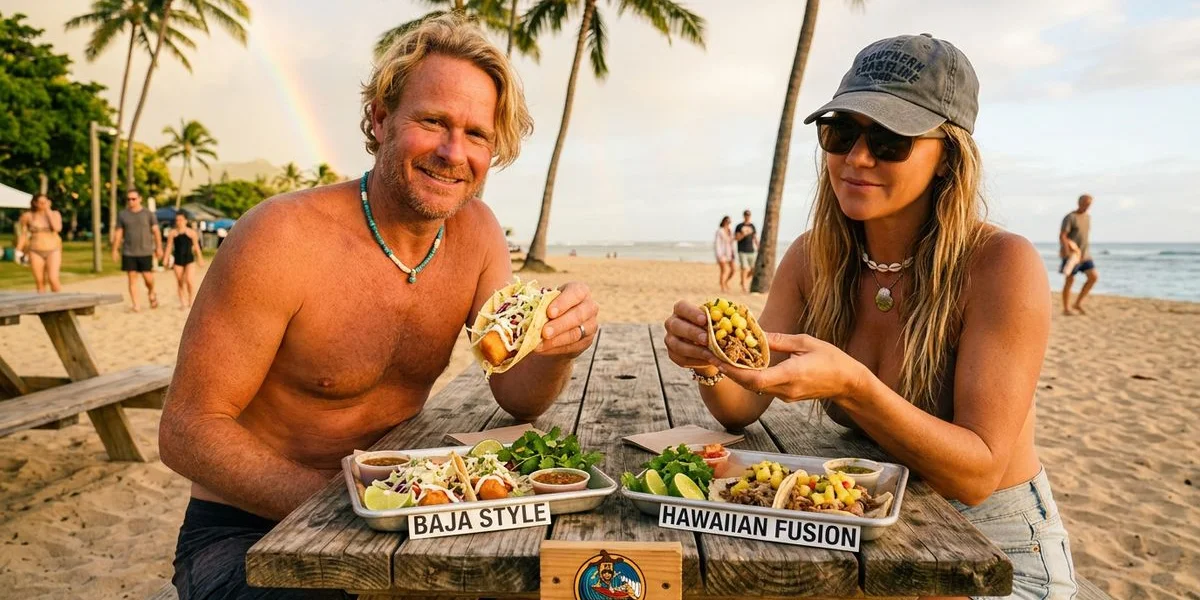
If you have ever ordered a taco in Hawaii, you likely noticed it tastes distinct from what you find in San Diego or Ensenada. The flavors are sweeter, the portions are heavier, and the sides often surprise first-time visitors.
We understand that confusion well.
North Shore Tacos sits right at the intersection of these two culinary traditions. Founder Joey Fullmer started this journey in 2010 by converting an old KFC in Hau’ula into a kitchen that respected Mexican roots while embracing the islands.
You need to know how these styles differ to truly appreciate the menu.
Our team is going to break down the specific ingredients that define Baja style, explain how Hawaii changed the game, and show you exactly how we blend them.
What Is Baja-Style Mexican Food?
Baja California is a long peninsula that stretches south from the US border, and its isolation created a unique food culture. This region developed a culinary identity that is distinct from the beef-heavy dishes of Sonora or the moles of Oaxaca.
The Ocean Dictates the Menu Seafood is the primary protein here. You will find that marlin, shark (often sold as “cazón”), and shrimp replace the carne asada found elsewhere. The focus is on freshness because the catch often travels less than five miles from the boat to the grill.
The Japanese Influence on Batter Real Baja fish tacos are defined by their crunch. Japanese fishermen who settled in Ensenada during the early 20th century introduced tempura frying techniques to the local population. This evolved into the beer-batter standard you see today.
The “Holy Trinity” of Toppings Authentic Baja tacos stick to a strict formula.
- Shredded Cabbage: It provides a necessary crunch that lettuce cannot match against hot fried fish.
- Crema: A mix of mayonnaise and sour cream (often thinned with lime) balances the heat.
- Pico de Gallo: Fresh chopped tomato, onion, and cilantro cut through the fried batter.
Street Cart Context The best examples come from places like the “Mercado Negro” fish market in Ensenada. These stands focus on speed and high heat. Plastic chairs and paper plates are the standard because the food is meant to be eaten immediately while standing near the ocean.
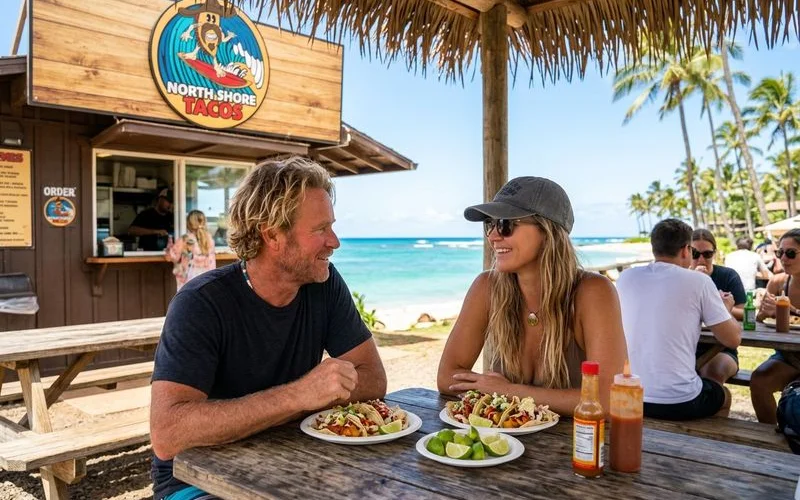
What Makes Hawaiian-Mexican Food Different?
Mexican food in Hawaii adapted to local tastes and the Plantation Era influence. Immigrant workers from Japan, China, and the Philippines shaped the local palate, which favors sweeter, savory profiles over pure heat.
The Plate Lunch Influence Local dining culture revolves around the “plate lunch” format. This standard dictates that a meal includes two scoops of sticky Calrose rice and one scoop of macaroni salad. You will often see Mexican entrees served alongside these heavy, carb-focused sides rather than traditional Spanish rice.
Tropical Sweetness and Shoyu Island cooking incorporates sugar and soy sauce (shoyu) into marinades.
- Teriyaki Glazes: Meats often have a teriyaki marinade rather than just dry chili rubs.
- Fruit Integration: Pineapple and mango are not just garnishes here. We use them in salsas to provide an acid that cuts through rich meats like Kalua pork.
Local Ingredients and “Canoe Plants” Hawaii has a limited agricultural ecosystem. Chefs rely on “canoe plants” brought by early Polynesian voyagers, such as taro and sweet potato. You might find taro flour tortillas or purple sweet potato sides that add an earthier flavor than corn.
Chili Pepper Water Baja has hot sauce, but Hawaii has chili pepper water. This condiment is made from local Hawaiian chili peppers, vinegar, garlic, and water. It adds a spicy, vinegary kick that is completely unique to the islands.
Comparison: Baja vs. Hawaiian-Mexican Styles
| Feature | Baja Style | Hawaiian-Mexican Style |
|---|---|---|
| Primary Protein | Fried white fish, shrimp, marlin | Mahi-Mahi, Ono, Kalua Pork, Spam |
| Dominant Flavor | Acidic, spicy, salty | Sweet, savory (umami), fruity |
| Standard Sides | Pinto beans, corn chips | Macaroni salad, sticky rice |
| Batter Style | Light, airy beer batter | Panko crust or teriyaki glaze |
| Salsa Base | Tomatillo, Tomato, Jalapeño | Mango, Pineapple, Habanero |
Where North Shore Tacos Fits In
We pride ourselves on being Baja-born and Hawaii-raised.
Our menu bridges the gap by keeping the technique from Mexico and sourcing the ingredients from Oahu.
What We Took From Baja
We respect the fundamentals of the Ensenada style.
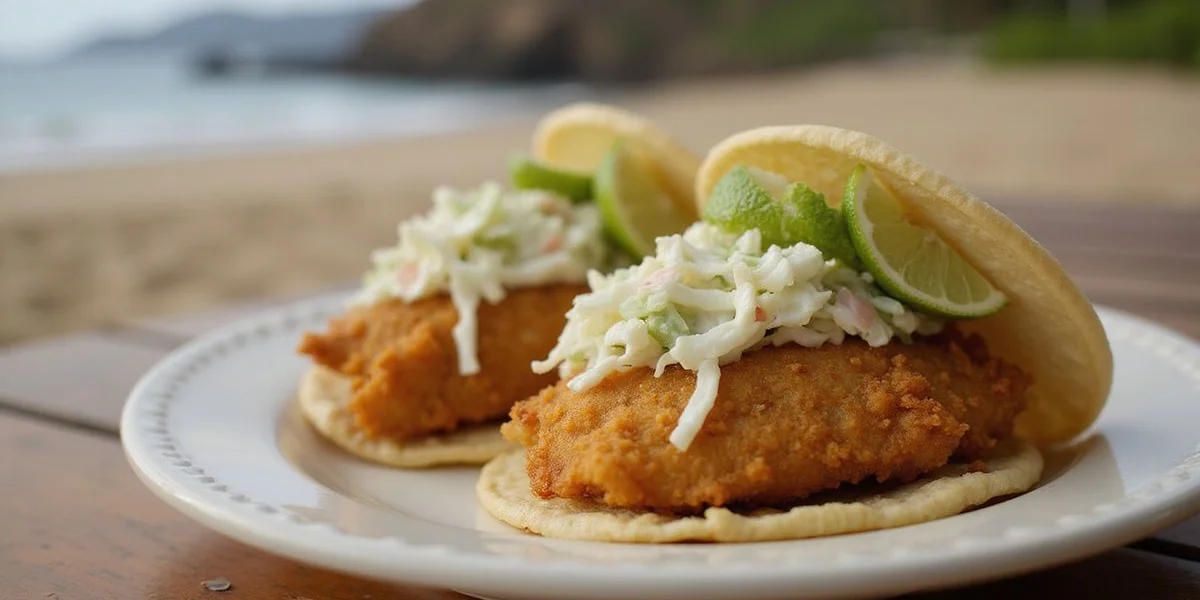
- The Crunch: Our Surfin’ Taco uses the tempura-style beer batter method to ensure the fish stays crisp under the sauce.
- Simple Tortillas: Flour tortillas are the standard in northern Baja, so we use them to hold the heavy ingredients together.
- Fresh Salsas: We make our salsas daily from scratch. Canned sauces never enter our kitchen because the Baja standard demands fresh produce.
What We Added From Hawaii
The local environment shapes our final product.
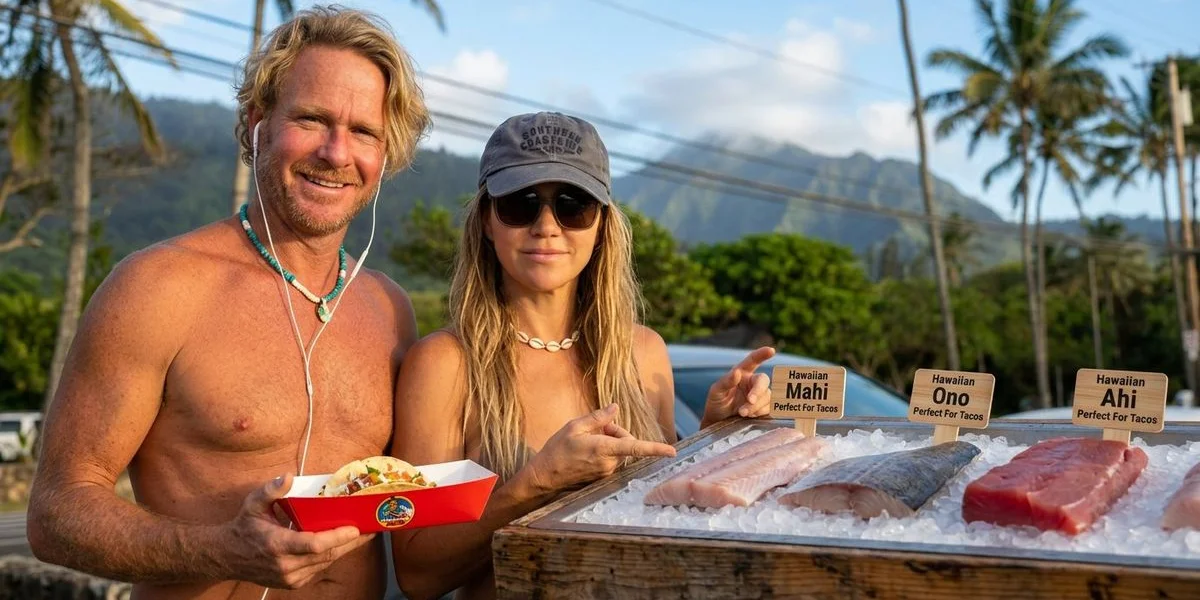
- Better Fish: We swap the generic white fish often found in Mexico for fresh local catch like Mahi-Mahi and Ono. The texture is firmer and the flavor is cleaner.
- Island Heat: Our signature pineapple-habanero sauce mixes the intense heat of the pepper with the high sugar content of local fruit.
- Aloha Portions: Surfers burn a lot of calories. We serve generous sizes that align with the local “plate lunch” expectations rather than the smaller street-taco portions of Mexico.
- Macadamia Nuts: You will find crushed macadamia nuts in select breadings for a richer, nuttier profile.
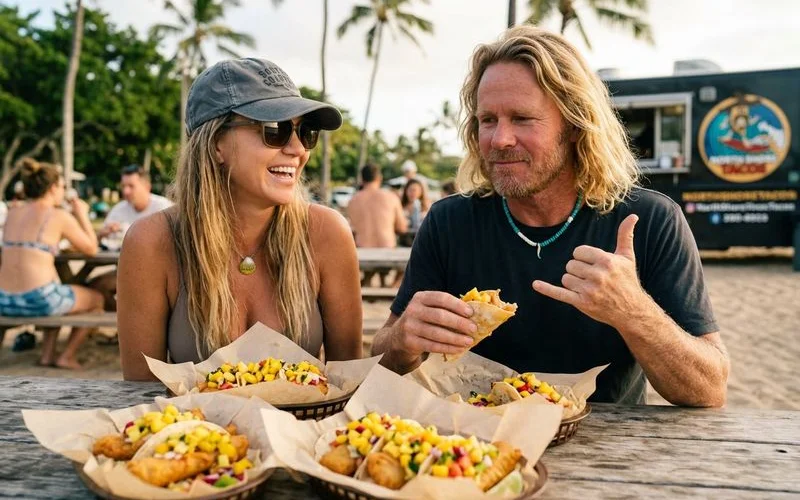
The Best of Both Worlds
You do not have to choose between these two styles.
Our menu allows you to mix traditions on a single plate.
- The Purist: Order a Surfin’ Taco for that classic Ensenada taste with beer batter and cabbage.
- The Local: Try the Grilled Fish Taco topped with mango salsa to taste the island influence.
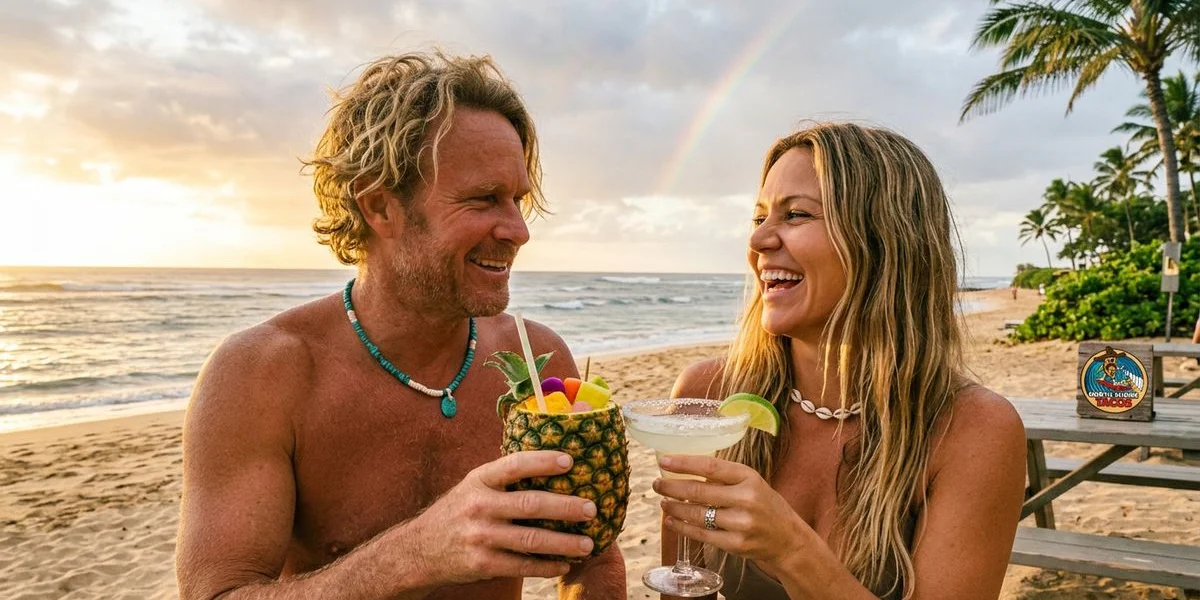
- The Fusion: Grab a Pineapple Tiki cocktail to wash down a spicy burrito.
These items work together because they share the same requirement for high-quality, fresh ingredients.
Why This Matters
Knowing the difference helps you understand the story on your plate.
A Surfin’ Taco at our Shark’s Cove truck represents a recipe that traveled thousands of miles. It started in the fishing camps of Baja, crossed the Pacific, and evolved to suit the tastes of the North Shore.
That history makes the food taste better.
We invite you to taste this evolution yourself. Stop by our Hau’ula restaurant or visit the Shark’s Cove food truck after your next surf session. You can also view our menu online to plan your order before you arrive.
Joey Fullmer
Founder & Head Chef
Joey Fullmer founded North Shore Tacos in 2010 after falling in love with Baja-style fish tacos during a surf trip to Mexico. He's been perfecting the craft on Oahu's North Shore ever since.
Taste What You've Been Reading About
The best tacos on the North Shore are waiting for you. Visit us today.